




Sustainability is no longer a niche topic in the promotional items market. Companies are actively seeking sustainable promotional items that credibly fit their own brand. The discussion usually starts with materials: bamboo, cork, recycled paper, organic cotton, plastic-free packaging.
That is important – but it doesn't go far enough. Because a promotional item is not automatically sustainable just because it is made from a more environmentally friendly material. What matters is a more fundamental question: Will the item actually be used – and does it stay in the recipient's everyday life for a long time?
90 %
of promotional items actually get used
62 %
keep promotional items for more than a year
> ⅔
keep promo items because of their utility
Source: GWW Impact Study / ASI Ad Impressions Study
The Problem: Sustainability Often Ends at the Material
Many catalogues for sustainable scatter items look similar today: bamboo pens, cotton bags, recycled notebooks, seed paper. These products can be useful. But sustainability is often reduced to the material – and that is the real problem.
A bamboo pen that stops working after a short time is not a strong sustainable promotional item.
A cotton bag that sits unused in a cupboard does not create sustainable advertising impact.
A give-away with an eco claim that serves no real purpose still ends up in the bin quickly.
Even an ecologically produced item requires production, transport, storage and packaging. If it isn't used afterwards, the resource expenditure was barely justified. Companies should therefore not only ask "Which promotional items are sustainable?" – but above all: "Which ones will be used long-term?"
What Real Sustainability Means for Promotional Items
A truly sustainable promotional item doesn't emerge from a single feature, but from the interplay of several factors.
Durability
The item remains usable for a long time – not just visually, but functionally.
Everyday Utility
The recipient has a real reason to use it in daily life.
Brand Fit
The product supports the positioning rather than contradicting it.
Quality
The item doesn't feel like disposable goods – quality is visible.
Responsible Production
Material, packaging and supply chain are consciously chosen.
Measurable Impact
Activations, usage data and campaign links make ROI visible.
Would the recipient keep this product even if there was no logo on it?
If the answer is no, the item probably isn't sustainable enough in its thinking.
Protection as the Strongest Form of Sustainable Impact
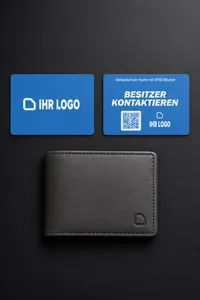
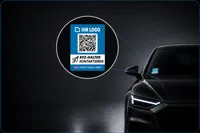
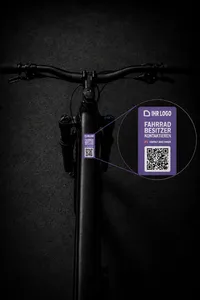
A particularly effective approach for long-lasting promotional items is protection. People keep products that give them security, reduce risks or help when there's a problem – without the logo needing to be the main reason. BrandTags products are built exactly on this principle.
Luggage Tag
Loss protection – helps recover lost luggage
Key Tag
Anonymous reachability – finders can get in touch without sharing data
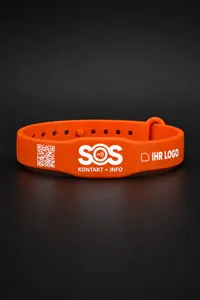
SOS Wristband
Emergency ID – provides key contacts quickly in an emergency
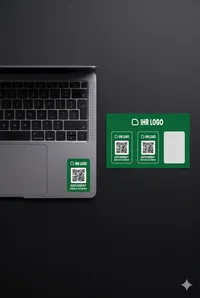
NFC Card / Sticker
Digital protection companion – brand presence and function in one
For insurance companies, banks, mobility providers or healthcare brands, this fits directly with the brand core: protection is not a foreign topic, but the actual promise. A functional safety item extends this promise concretely into the everyday lives of recipients.
Data: Making Sustainability Measurable
Sustainability in promotional items also means deploying resources more purposefully. Whoever doesn't know which items are being used orders on gut feeling. BrandTags can close this gap.
Activation Rate
Which items were actually set up – and which end up unused in a drawer?
Usage Frequency
How often is the item accessed in daily life? Recurring usage shows genuine relevance.
Campaign ROI
Which actions generate real interaction? UTM links make conversions directly evaluable.
Product Comparison
Which sustainable promotional items are actually being used – and which shouldn't be produced further?
Before
- — Check material for eco credentials
- — Order quantity, distribute, hope
- — Claim sustainability
- — Impact stays invisible
Today
- → Check usage duration and function
- → Track activations, evaluate data
- → Make sustainability measurable
- → Improve next campaign with data
BrandTags – Impact Through Real Utility
Products that stay in everyday life – and keep your brand permanently visible in the process.
Conclusion
Sustainable promotional items are more than a material trend. They are a strategic decision. What matters is not just how green a product looks – but whether it is used for a long time, offers genuine added value and reflects positively on the brand.
Sustainability starts with usage, not material.
Function creates longevity – and longevity creates impact.
Wastage becomes measurable resource deployment.
Sustainable is not what looks green. Sustainable is what stays.
The future of sustainable promotional items doesn't lie in the next short-lived packaging with an eco claim. It lies in products that people keep because they genuinely benefit from them. BrandTags combines exactly that: real everyday utility, long-term brand presence and measurable impact in one product.