




Sustainable Promotional Items: 7 Selection Criteria. A sustainable promotional item is not defined by the greenest-sounding material. Start with need and quantity, then assess actual use, service life and the full life cycle. A positive property of one component must not be presented as a property of the entire product.
A sustainable promotional item is not defined by the greenest-sounding material. Start with need and quantity, then assess actual use, service life and the full life cycle. A positive property of one component must not be presented as a property of the entire product.
Why material alone is not enough
Material is important, but it is only one part of the assessment. Renewable or recycled raw materials still require processing, decoration, packaging and transport. Frequent use does not make a product environmentally harmless either. Credible procurement considers raw materials, production, distribution, use and end of life together. German Environment Agency: ecodesign and life-cycle thinking.
Seven criteria for choosing more sustainable promotional items
- Need before product: define the occasion, audience and intended action. Not purchasing may be the better decision.
- Relevance and use: would recipients use the item without the logo? Target precisely instead of distributing indiscriminately.
- Service life and quality: check workmanship, function, resilience and update or repair options.
- Material and quantity: assess shares, origin, mixed materials, harmful substances and the amount required.
- Production and supply chain: request information on manufacturing locations, quality management and social standards.
- Packaging and logistics: avoid unnecessary individual packaging, empty shipping volume and express routes.
- End of life: clarify separability, reuse, take-back and realistic local disposal routes.
Avoid greenwashing: be specific
Generic claims such as “green”, “eco-friendly” or “sustainable” require evidence for the asserted scope. EU Directive 2024/825 tightens the rules for generic environmental claims and for transferring a property of one component to the whole product. Name the certified component and the exact verified property. Directive (EU) 2024/825.
1. Objective and intended action
2. Audience, situation and realistic quantity
3. Expected frequency and duration of use
4. Mandatory materials, evidence and production standards
Which BrandTags products may fit the strategy?
These are examples of functional items designed for continued use. Utility or a digital feature alone does not make them sustainable; assess each configuration against all seven criteria.
Everyday use
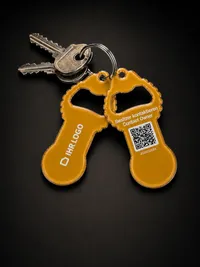
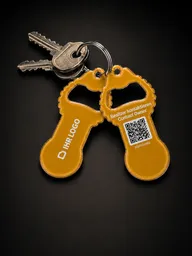
Branded shopping cart token
A compact everyday helper. Material, quality, quantity and real use still need assessment.
Travel · long-term use
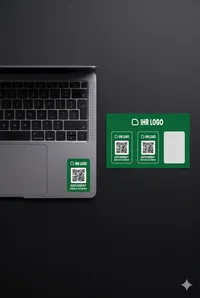
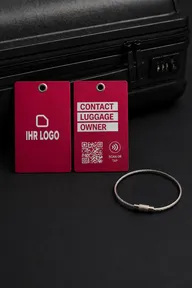
Branded luggage tag
Combines identification and a digital contact function; destinations can be updated without replacing the tag.
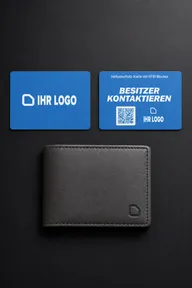
Cards · functional protection
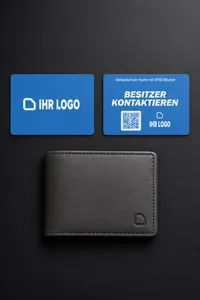
Branded RFID blocker
Designed for audiences that use cards regularly. Verified function and robust construction matter.

Mobility · used on the object
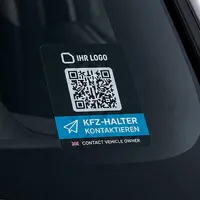
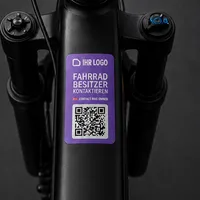
Vehicle QR/NFC sticker
Stays where its contact function is needed; material, adhesive, production and disposal also count.
Digital functions can extend usefulness
QR and NFC destinations can be updated without replacing the physical item solely because information has become outdated. This can support a longer useful life if pages remain available, responsibilities are clear and the service is relevant. Activation data can improve future quantities, but it is not a life-cycle assessment.
Briefing checklist
- Objective and intended action
- Audience, situation and realistic quantity
- Expected frequency and duration of use
- Mandatory materials, evidence and production standards
- Packaging and delivery requirements
- Approved claim and its precise scope
- Feedback, activation and remaining stock
View products with transparent information
Compare BrandTags products and clarify material, configuration, packaging and digital utility for your application.
Frequently asked questions
What makes a promotional item sustainable?
No single property does. Need, use, service life, materials, production, social conditions, transport, packaging and end of life all matter.
Is bamboo automatically sustainable?
No. Origin, processing, additional components, durability, transport and disposal must also be assessed.
Is Made in Germany proof of sustainability?
No. Regional production may shorten routes and improve transparency, but does not by itself prove low environmental impact or fair production.
How should order quantity be set?
Derive it from the audience, occasion and a realistic distribution plan. Test new items with a defined pilot before scaling.
Conclusion: sustainability starts before the order
A credible strategy starts with need and quantity, followed by use, quality, material, production, logistics and end of life. Utility is central—a product without relevance should not be produced—but it remains only one part of the complete assessment.