
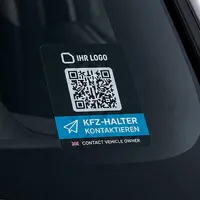
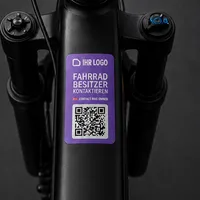
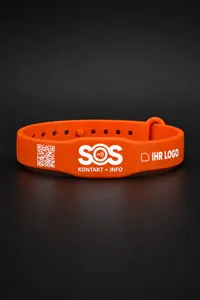
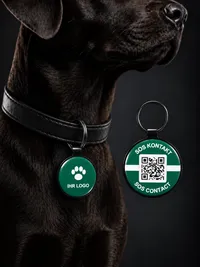
At trade fairs, on field sales visits, or during new-customer onboarding, promotional items are still handed out — for good reason: they create attention, stay present in everyday life, and feel more personable than yet another form. But attention isn't a contact yet. In most companies, there's a gap between a distributed giveaway and a qualified lead in the CRM that never closes.
Scatter loss has a name: the contact that never happens
The business card ends up in a jacket pocket instead of the CRM. The raffle form at the trade show booth gets thrown away after the event. The prospect who briefly listened at the reception desk leaves the building — without anyone documenting their consent to be contacted. The real problem is rarely a lack of reach. It's a lack of documentation.
The simple fix: hand out a promotional item with hiddencontact®. The customer gets real, lasting value — and can become a documented lead during registration. Handed out in seconds, converting for years.
How many booth visitors showed genuine interest — and how many did we still never reach again?
Does the business card end up in the CRM, or really just in a drawer?
Was consent to be contacted ever documented, at any point?
Who on the team even still knows who showed real interest at the last trade show?
Many providers' obvious answer: turn the promotional item itself into a form. Slap on a QR code, put a landing page behind it, add a mandatory email field — done, a "lead generator." Except to the recipient, that often feels like exactly what it is: a condition. And conditions get met less often than voluntary decisions.
The difference: a voluntary opt-in instead of a forced form
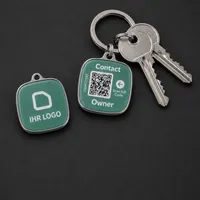
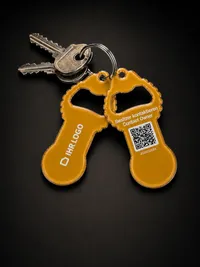
BrandTags reverses the order. The physical or digital item is, first and foremost, real everyday value — a luggage tag that helps if it's lost, a key fob with an anonymous contact function, a sticker that makes a bicycle traceable again. Through the hiddencontact® function, every recipient decides for themselves whether a message is only forwarded anonymously, or whether they set up an open profile with their own information. This value stays with them permanently — regardless of whether they later decide to give more.
For you as a brand, the benefit only arrives in the second step: if the recipient also gives their opt-in, they're automatically transferred as a lead into your lead system — almost any CRM can be connected via webhook or API. This opt-in is a separate, clearly recognizable step on the same landing page — not the entry ticket to the product.
Not: scan → fill out form → use product.
But: use the product, experience real value — then voluntarily and with documentation, decide on further contact.
At first glance, this order costs speed. But it pays off in quality: someone who registers voluntarily does so with genuine intent — not because they'd otherwise not get their product.
The pre-registration landing page: six building blocks, one contact
After activation, every recipient lands on a pre-registration landing page in your branding. There, you as the company choose which action to offer — configurable, adjustable at any time, without having to produce a new item.
Lead opt-in
We ask the recipient directly whether we may pass their contact details to your CRM system — only with explicit consent, then via API or webhook.
Newsletter sign-up
Voluntary, GDPR-compliant opt-in for further communication by email.
Appointment booking
Direct booking for consultation, service, or a trial appointment. The booked appointment is itself already the lead.
Discount code
A personal code for the first purchase — often the first documented touchpoint with the brand.
Short survey
A brief question about needs or satisfaction, answered voluntarily — valuable for segmentation.
Leave a review
Leads to the review page on Google, Trustpilot, or in the shop — an additional interaction point.
Branding and target link can be adjusted at any time, even after production — a trade show campaign can later be switched to a pure opt-in page without a single item needing to be reprinted.
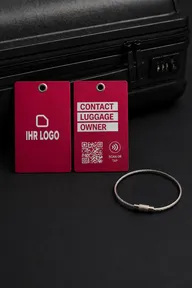
BrandTags Product
Luggage Tag with Logo
The classic trade-show and travel promotional item — with loss protection and a configurable landing page including lead opt-in.
What this means for your lead system
With the lead opt-in activated, we ask the recipient directly whether we may pass their contact details to you or your CRM system — we only do so with explicit consent. Every consent first appears in your campaign dashboard — alongside scans, activation rate, and campaign links you're already using to measure your promotional items' success. For companies who want to process their leads directly in an existing system, we set up a connection on request: natively for HubSpot, Salesforce, or Pipedrive — practically any other CRM can be connected via webhook or API, for example through Zapier or Make.
Opt-in rate
How many activations actually lead to a voluntary opt-in?
Activation rate
How many distributed items were actually registered and used?
Campaign links & source
Which action, which location, or which target group generated the contact?
Consent timestamp
Exactly when was consent given? Documented as proof for regulators.
Usable digitally and physically
Not every campaign needs a new physical item. The same activation logic — including the opt-in module — can also run purely digitally: as a QR code or NFC link on your own product, on packaging, or in printed materials, with no minimum order quantity and no new inventory. For trade fairs, field sales, or a classic customer gift, the physical BrandTag — luggage tag, key fob, SOS wristband, and more — remains the obvious choice.
BrandTags Product
OEM & digitalOnly
The same activation logic as a pure QR or NFC link for your own product — with no minimum order quantity for physical goods.
Before
- — Business cards pile up in a bowl
- — Paper form at the trade show booth
- — No documented consent
- — Manual data entry weeks later
Today
- → A scan leads to your own landing page
- → Opt-in is documented right at activation
- → Source & timestamp captured automatically
- → Digital or physical — depending on the use case
The extreme case: when the seller isn't even allowed to ask
On marketplaces like Amazon, sellers are generally prohibited from contacting buyers for marketing purposes. Amazon's communication policies allow messages to buyers only for order fulfillment or customer service, and product inserts may not contain private email addresses, phone numbers, or links leading away from the marketplace. Explicitly permitted are only legally required information as well as warranty, registration, and support content.
This is exactly where the advantage of a hiddencontact® element on the product or an insert shows: it doesn't present itself as a marketing message, but as what it actually is — a safety, warranty, or registration feature. The initiative lies entirely with the customer: they scan on their own initiative, outside any Amazon system, and decide for themselves whether to also opt in to your lead system. What was a marketplace purchase with zero documented contact becomes — only with the customer's consent — a real, documented business relationship.
Not: the seller collects their buyers' contact details.
But: the customer decides for themselves — outside Amazon, documented, with real value.
Note: Amazon's policies change regularly — sellers should always check the currently valid terms themselves. What matters is that the BrandTag functions as a safety, warranty, or registration feature, not as a marketing message.
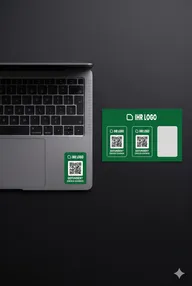
BrandTags Product
Anti-Loss Sticker
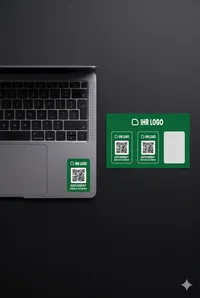
Protects valuables from loss — small enough for any product insert, with real value instead of a marketing message.
BrandTags — opt-in instead of scatter loss
Promotional items with real value, a voluntary opt-in, and measurable impact — digital and physical.
Conclusion
A promotional item that simply gets noticed has always had value. A promotional item that also generates a documented, voluntary contact is more than a giveaway — it's a channel. The difference isn't in the technology, but in the order: real value first, then the voluntary decision for more contact.
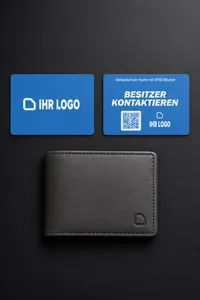
The business card becomes a documented opt-in.
The trade-show contact becomes a qualified lead.
The forced form becomes a voluntary decision.
The promotional item becomes a channel — digital and physical.
Anyone who, next time they plan a promotional item budget, asks not just about reach but about documented contacts changes the metric gifting gets measured by. With BrandTags, that step is immediately achievable — no forced form, no scatter loss after the fact.
Frequently Asked Questions
Is a promotional item with an opt-in function GDPR-compliant? +
Yes. Consent is given voluntarily during activation, is documented with a timestamp and source, and can be withdrawn at any time. It is never a condition for using the product's core function.
How does a scanned promotional item turn into a lead? +
After activation, the recipient lands on a pre-registration landing page in the company's own branding. If the "Lead opt-in" module is active there, we ask them directly whether we may pass their contact details to the company or its CRM system. This only happens with explicit consent — automatically via API or webhook.
Which CRM systems can be connected? +
HubSpot, Salesforce, and Pipedrive natively. Practically any other system can be connected via webhook or API, for example through Zapier or Make.
Can lead generation via BrandTags be used without a physical product? +
Yes. Via the OEM / digitalOnly option, the same activation logic can be applied as a pure QR or NFC link on your own product or packaging — with no minimum order quantity for physical goods.
Is contacting recipients via a promotional item also allowed for sales made on Amazon? +
Direct marketing contact by the seller is not permitted on Amazon. A hiddencontact® element that functions as a safety, warranty, or registration feature — where the customer voluntarily opts in on their own initiative — falls within the allowed scope. Sellers should always check Amazon's currently valid policies themselves.
Does the recipient need to install an app to register? +
No. Scanning the QR code or tapping NFC is enough — the landing page opens directly in the browser, no app and no installation required.
How does BrandTags differ from plain lead-capture promotional items? +
BrandTags products offer a lasting everyday benefit independent of the opt-in, such as loss protection through the hiddencontact® function. The lead opt-in is a voluntary additional step on the landing page, not a condition for using the product.